The influence of social media has been increasing with the passing of the years, for example, TikTok or Instagram. Media in which you can spend a lot of time watching fifteen-second clips about political themes, news, trends, or just identifying yourself with specific content that each platform personalizes for you. At this point, we can say that each media can change how we see the world, and you may be asking, why? Well, it gets to a time in which you are not going to know if something is real or not. Most of the influencers sell people a fantasy, or even something that doesn’t exist, and as an audience, we don’t question ourselves about what we see. A big example of this, in these passing years, we can see how this wave of conservatism created by women has been raising these trends like tradewives, traditional femineity; giving an idealized idea and making it an aspirational goal. Social media, especially through their algorithms and the way they present this content, have given rise to these traditional values and have influenced how new generations understand femininity and gender equality.
To understand how the TikTok algorithm works, consider this sequence: first, give people something to talk about; next, stir up emotions; and finally, spark a controversy. Take, for instance, content creators who embrace the “Tradwife” concept. Their aesthetic is one of domestic nostalgia and tranquility: featuring clean kitchens, freshly cooked meals, and child-rearing while simultaneously showcasing their financial dependence on their husbands. These themes technically follow the sequence that I just said. Even this concept has been promoted by the political influencer, Erika Kirk, part of Turning Point USA (one of the most conservative movements). Most of her speeches are based on religious and extremist ideas. She promotes the “biblical femininity,» in which women must do all the domestic assignments and submit to their husbands. However, as if that was not enough, she invited Savannah Faith Stone, a prominent anti-feminist influencer, to participate in one of her events, Women’s Leadership Summit, to talk about the famous “household voting.” The main idea of this is that the vote must not be individual because of family values, and who would vote would be the head of the household, in other words, the men.
A key question we should ask ourselves is, why are a lot of women supporting this idea?
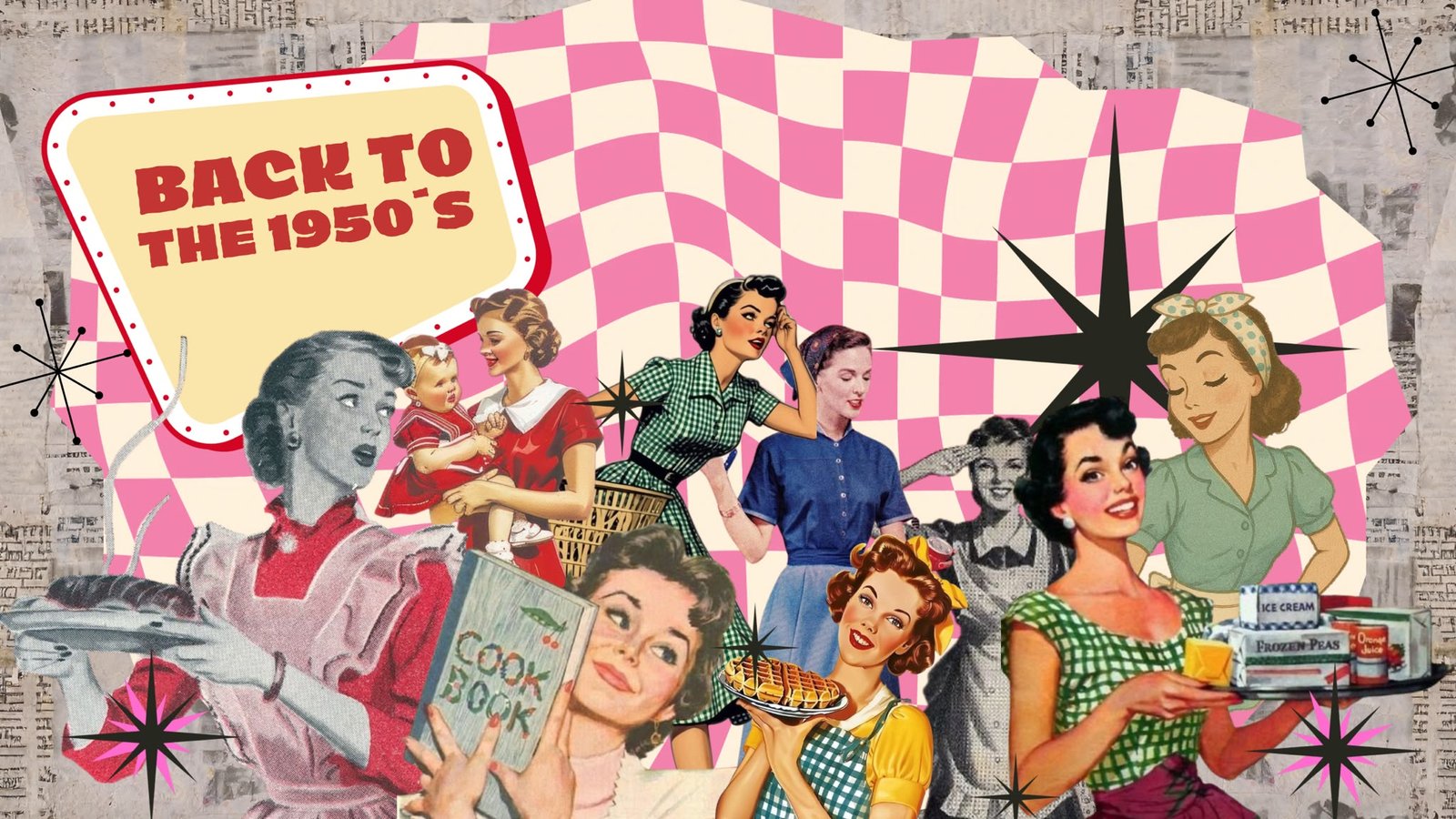
Easy: defined roles. Most women find peace and kind of satisfaction in the old family structure in which the man is the provider and the Lider, while the woman decides to administrate the domestic space. Religion and values are part of that too. In most cases, this lifestyle follows a posture of religious ideas and conservative politics. The most important, aesthetics and social media. The influencers like Ballerina Farm and Estee Williams present this content with a nostalgic, clean, and attractive image with an inspiration based on the 1050’s or farm life, generating a feeling of community and digital pertinacious for what they are promoting; but why has this theme despite a lot of different opinions against the Tradwives? Presenting this as a unique idea, saying explicitly that you need to have submission to your husband as a woman, is the limiting result in the face of the diversity of actual lifestyles. The difference is when you choose it, and it is not bad; every woman needs to have the liberty to decide, but when you are promoting this lifestyle as the “correct” one, that’s not how it works.
Social media has been promoting this as a trend. The short-form video format rewards immediate visual satisfaction, making household routines look like a peaceful fairy tale and selling you a fantasy. I just want to say that if these traditional values mean reducing women to household assignments and reproduction, then the problem is not women, it is the definition of values, because they should not serve to control women’s lives, but rather to protect dignity, empathy, justice, and the possibility for each person to choose their own path. When a tradition requires the obedience of some to uphold the power of others, perhaps we are not talking about values, but about customs that deserve to be re-examined. For true values do not fear questions.